
Data Centre Installers & Infrastructure Contractors
A controlled installation partner for data halls, equipment rooms, expansions and live-site modifications—from survey and workfront readiness to tested handover.
Data centre installers turn an approved infrastructure design into a safe, labelled, tested and maintainable physical environment. FDNS coordinates racks and pathways, structured copper and fibre cabling, patching, testing, documentation and live-site controls while working within the responsibilities of the principal contractor and specialist trades.
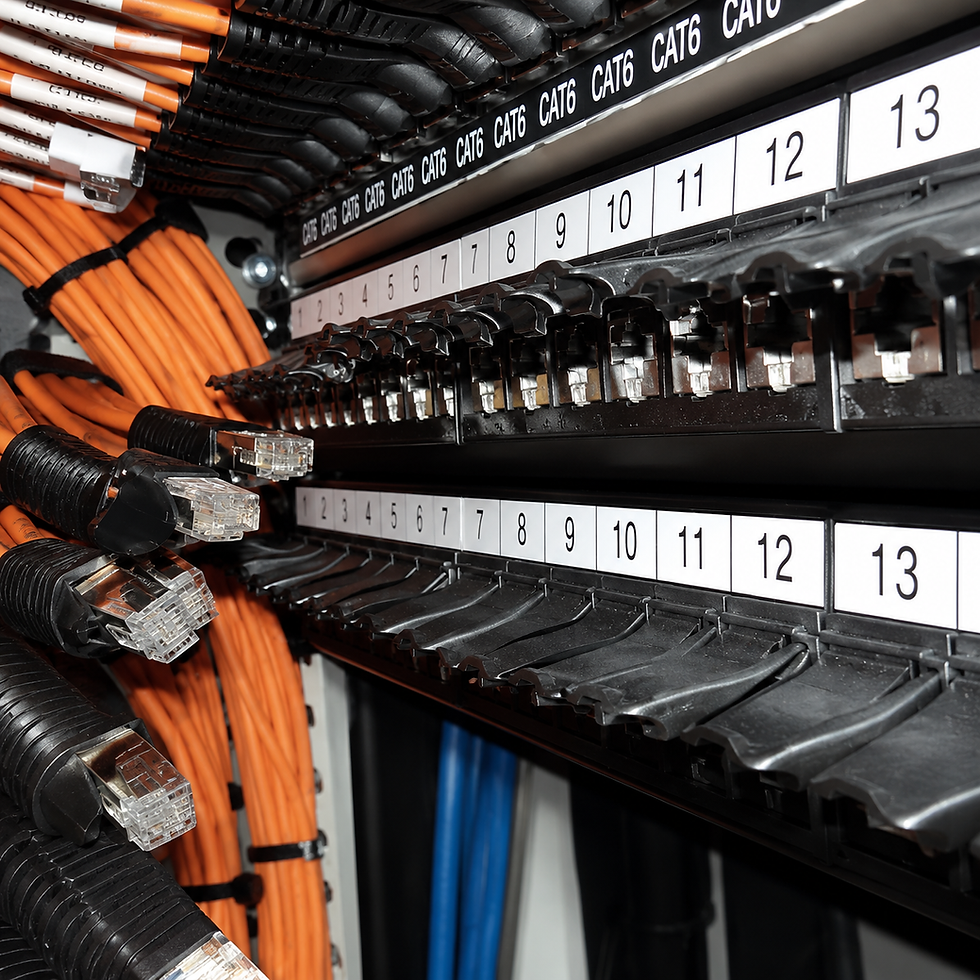
What do data centre installers do?
Data centre installers turn an approved infrastructure design into a safe, labelled, tested and maintainable physical environment. FDNS coordinates racks and pathways, structured copper and fibre cabling, patching, testing, documentation and live-site controls while working within the responsibilities of the principal contractor and specialist trades.
FDNS supports operators, principal contractors and integrators with defined installation work packages. Before mobilisation, we agree which team owns rack positioning, pathways, cabling, bonding interfaces and specialist building systems. This helps sequence work around available rooms, approved drawings, materials and operational access.
The completed installation is checked against agreed drawings, identifiers and acceptance requirements. Cabling test results, physical inspections and outstanding dependencies are reconciled for handover. This gives the client a defined completion record and helps the operations team understand what has been installed, tested and released for use.
What the service includes
Pre-installation review
We review scope, drawings, rack layouts, pathways, power and cooling interfaces, fire strategy constraints, access, permits, materials and acceptance requirements. Resolve scope gaps and incomplete drawings before labour and materials are committed to an installation area.
Rack and containment installation support
Cabinets, rack layouts, overhead or underfloor pathways and cable-management components are installed or coordinated within the approved design and trade boundaries. Confirm cabinets, routes and containment interfaces are ready before releasing copper and fibre work packages.
Copper and fibre infrastructure
Backbone, interconnect, cross-connect and management cabling are installed, terminated, labelled and protected for reliable operation. Match cable routes and terminations to the approved schedules, protecting identification through installation and testing.
Patching and equipment connectivity
Patch fields and approved device connections can be dressed and recorded to preserve airflow, service identification and future access. Agree connection records and change authority before patching equipment or modifying existing live connectivity.
Testing and snag management
Links and physical installation are inspected and tested, with defects, incomplete interfaces and client decisions tracked to closure. Track defective links and incomplete installation interfaces against named owners and agreed completion dates.
Operational handover
Drawings, schedules, results, exceptions, warranties and work-package status are assembled for the owner and operations team. Reconcile installed assets, test evidence and exceptions so operations teams receive a usable completion record.
Important design and delivery decisions
Data-centre infrastructure is changed repeatedly during its life. Early decisions therefore need to balance capacity and density with access, resilience, airflow, safety, security, testing and the ability of operations teams to understand the environment.
Define installer boundaries
Racks, power, bonding, active equipment, controls, fire systems and cooling may belong to different competent parties; the responsibility matrix must be explicit. Define the boundaries between physical installation and electrical, cooling, fire-system and active-equipment responsibilities.
Buildability and access
Approved drawings still need checking against real rack positions, pathway congestion, access clearances and live operational restrictions. Check actual room conditions and access before approving the installation sequence or material delivery plan.
Sequence by dependencies
Installation quality and programme depend on ready rooms, containment, racks, earthing or bonding interfaces, environmental conditions and approved information. Release work areas only when the required racks, pathways, information and operational approvals are available.
Plan for operations
Labels, patch access, service loops, spare capacity, records and safe replacement paths influence long-term support more than cosmetic completion alone. Keep patching access, spare capacity and maintainable routes visible during installation decisions.
Our controlled delivery process
The exact programme is adapted to the site, operator and principal contractor. These checkpoints provide a practical route from workfront release to operational handover.
1
Define
Agree work packages, design responsibility, interfaces, permits, site rules, acceptance and handover. Agree responsibilities, drawings, work areas, acceptance criteria and live-service controls before mobilisation.
2
Survey
Verify workfront condition, dimensions, racks, routes, access, live services and dependencies. Check installed conditions against the design, recording access restrictions and dependencies affecting the work.
3
Plan
Sequence labour, materials, equipment, logistics, method statements, change controls and inspections. Sequence materials, labour and inspections around ready work areas and approved changes.
4
Install
Deliver racks, pathways and connectivity within scope, using controlled labels, housekeeping and protection. Inspect labels, cable handling and physical interfaces during installation so defects are addressed before testing.
5
5
Commission
Inspect workmanship, certify cabling, resolve snags and support integrated checks with responsible trades. Certify the agreed links and close installation snags with the responsible trades before acceptance.
6
Handover
Issue reconciled records and formally identify outstanding exceptions, ownership and completion dates. Provide reconciled drawings, schedules and test evidence, clearly assigning any remaining exceptions.

Standards, testing and quality assurance
Installation may reference ISO/IEC 22237 and BS EN 50600 data-centre principles, ISO/IEC 11801-5, BS EN 50173-5, BS EN 50174 and BS 6701 for cabling, plus manufacturer requirements and the approved design. Electrical, fire, cooling, structural and life-safety work remains subject to the responsible competent designers and contractors.
A standard does not replace the approved design or client work package. FDNS confirms the asset, link, environment, equipment interfaces and acceptance requirements before selecting installation details or test limits. Measurements and inspections use consistent identifiers and retain settings, native evidence and exceptions.
Delivery is managed through FDNS’ ISO 9001, ISO 14001 and ISO 45001 management systems. This supports controlled quality, environmental responsibilities and safety-led working in live data halls, construction zones, equipment rooms and multi-contractor environments.
Where FDNS data centre infrastructure contractors are used
FDNS supports new-build, expansion, retrofit and live data centre programmes where clients need an infrastructure contractor capable of coordinating multiple passive-network and physical work packages. Typical scopes include structured cabling, fibre, racks, containment, patching, testing, migration support, meet-me rooms, carrier interfaces and related installation works.
This service is particularly relevant to principal contractors, data centre operators, colocation providers, systems integrators and end users that want one delivery partner to manage interfaces between trades and maintain a consistent technical standard across the programme.
Common infrastructure delivery risks and how FDNS controls them
Multi-package projects can suffer from fragmented responsibilities, duplicated work, programme clashes, incomplete handovers and technical assumptions that fall between trades. FDNS controls these risks through defined scope, interface management, coordinated work packs, consistent labelling, staged quality checks, documented changes and a single evidence-led handover process.
Our ISO 9001, ISO 14001 and ISO 45001 management systems support controlled delivery in live and construction environments, while technical decisions are aligned with the relevant data centre, structured cabling and manufacturer requirements.
How our infrastructure contractor service differs from specialist data centre services
This service is the wider delivery and coordination layer. Specialist pages such as Data Centre Cabling, Fibre Optic Installation, Racking, Cold Aisle Installation, Testing and Relocation describe individual technical packages in greater detail. FDNS can combine those packages under one coordinated infrastructure contract where the project requires it.
Planning a data centre infrastructure delivery package
A well-defined data-centre work package helps align infrastructure design, access, sequencing, testing and handover requirements before mobilisation. It also makes quotations easier to compare on an equivalent technical basis and reduces avoidable change during delivery.
Information needed for an infrastructure contractor quotation
When several work packages are being delivered together, the most important planning task is defining who owns each interface. FDNS reviews the overall data centre scope across cabling, fibre, racks, containment, testing, patching, migration support, carrier interfaces and associated installation activities. This allows responsibilities, dependencies, programme sequence and acceptance requirements to be made visible before work starts.
A coordinated approach is particularly useful for new-build halls, colocation fit-outs, hyperscale expansions and live-site upgrades where multiple contractors are working in the same space. Clear interface management reduces duplicated effort, missed scope and late changes between trades.
Project controls and infrastructure handover
Provide the overall project scope, drawings, work packages, programme, client standards, site rules, permit requirements, access constraints, security arrangements, logistics plan, rack and cabling schedules, design responsibilities and the interfaces with power, cooling, fire, security and active network systems. Identify which items are client-supplied, contractor-supplied or provided by specialist third parties.
The brief should also define inspection stages, testing, quality records, native evidence, redlines, as-built information, change control, snagging, warranty requirements and the expected handover format. This gives FDNS a clear basis for coordinating labour, materials and technical delivery.
Why choose FDNS as your data centre infrastructure contractor?
FDNS provides a single technically capable delivery partner for data centre projects where multiple physical infrastructure workstreams have to integrate correctly. Our capability spans structured copper, fibre, MPO/MTP, racks, pathways, containment, testing, relocations and live-site modifications. With more than 35 years of telecommunications and fibre experience and ISO 9001, ISO 14001 and ISO 45001 management systems, we bring technical coordination, controlled delivery and traceable handover to projects that might otherwise be fragmented across several contractors.
Multi-Discipline Data Centre Capability
Cabling, fibre, racks, pathways, containment and testing can be coordinated within one delivery structure. This reduces gaps between trades and gives the client clearer ownership of interfaces.
Standards-Led Technical Delivery
Project specifications, manufacturer requirements, acceptance criteria and client standards are reviewed before work starts. This gives installation teams a defined technical basis rather than relying on informal site interpretation.
Controlled Live-Site Working
Access, permits, change windows, temporary protection, logistics and working restrictions can be incorporated into the delivery plan for operational data centres and colocation environments.
Inspection, Testing and Quality Evidence
Quality checks and technical testing are linked to the installed work so completion can be demonstrated with objective evidence. Exceptions and remedial actions are recorded rather than being hidden within handover.
One Coordinated Handover
Labels, schedules, drawings, test files, redlines and known exceptions can be brought together into a consistent final record. This gives operators and principal contractors a clearer basis for acceptance and future maintenance.
Frequently asked questions about data centre installers and infrastructure contractors
1. What work does a professional data centre infrastructure contractor carry out?
A data centre installer may deliver or coordinate racks, cable pathways, structured copper and fibre cabling, termination, patching, labelling, inspection, testing and handover. The precise package varies. Power, cooling, fire systems, controls, security, structural work and active-equipment configuration require clear allocation to the relevant competent parties.
2. Can FDNS deliver installation work inside a live operational data centre?
Yes, where the site approves the method and scope. Planning can include change requests, permits, access windows, protection of live equipment, route controls, asset verification, dust and debris management, daily reinstatement and escalation. Work proceeds only within the operator’s live-site rules and agreed service-impact boundaries.
3. Can FDNS install racks, structured cabling and fibre within one coordinated work package?
FDNS can support rack and cable-management installation alongside copper and fibre cabling, subject to the approved design, structural and bonding requirements, manufacturer instructions and agreed responsibilities. A site survey confirms floor or support conditions, layout, access, power and cooling interfaces, containment and the party approving final rack positions.
4. Can FDNS support complete data hall infrastructure fit-outs and upgrade programmes?
FDNS can deliver a defined network-infrastructure package and coordinate with principal contractors and specialist trades. Whether that is described as a complete fit-out depends on the contract. Electrical distribution, cooling, fire protection, building controls and other disciplines must remain under appropriately competent design and delivery ownership.
5. How does FDNS control workmanship, testing and installation quality on data centre projects?
Quality controls can include approved drawings and details, material verification, installer competence, first-off inspections, workfront checks, label and workmanship standards, photographic evidence, copper and fibre certification, snag tracking, exception review and supervisory sampling. Acceptance criteria are agreed before installation rather than invented at completion.
6. What must be ready before a data centre infrastructure installation begins?
Typical prerequisites include approved design information, released rooms or zones, safe access, installed and accepted pathways, confirmed rack positions, power and bonding interfaces, environmental conditions, materials, permits, test requirements and a clear responsibility matrix. Missing dependencies are logged rather than concealed within installation progress.
7. What as-built records, test results and handover documentation should a data centre contractor provide?
The handover can include as-built or redline drawings, cable and port schedules, rack and panel information, labels, copper and fibre result files, inspection records, photographs, material or warranty records, exceptions and completion status. The required file format and naming structure should be part of the work package.
8. What information does FDNS need to prepare an accurate data centre infrastructure quotation?
A dependable quotation needs drawings, quantities, rack and pathway information, cabling types, termination and test requirements, site rules, access hours, logistics, permits, programme, live-service restrictions, documentation and exclusions. A survey or design review is recommended where records or interfaces are incomplete.
Related data centre services
Discuss your data centre infrastructure delivery programme
Whether you are planning a new data hall, capacity expansion, live-site upgrade or multi-site programme, FDNS can support survey, workfront readiness, racks, structured cabling, fibre, testing, quality control and handover under one coordinated delivery model.