

Who provides independent fibre optic testing and certification in Leek?
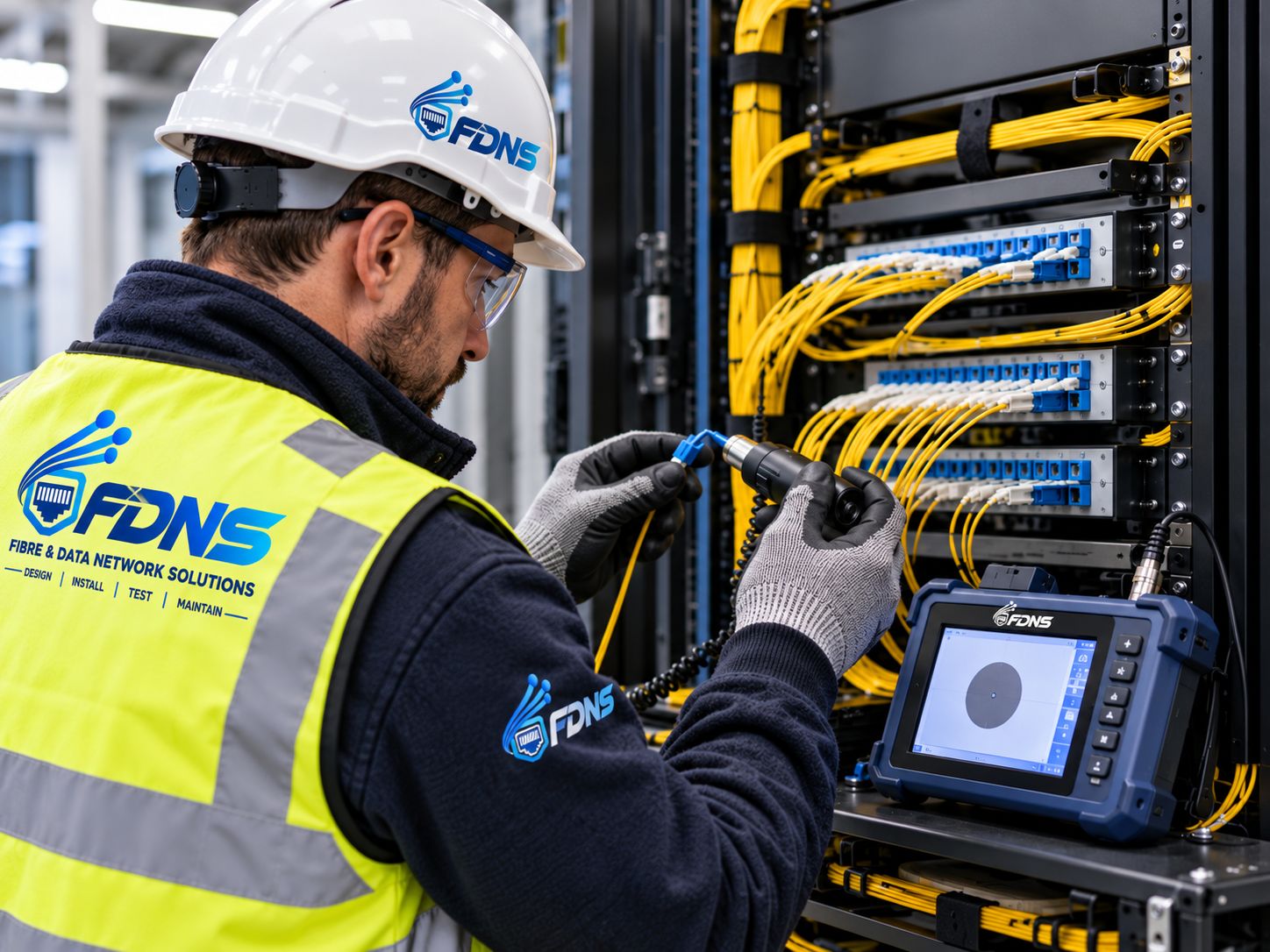
FDNS provides independent fibre optic testing and certification in Leek for enterprise, data centre, telecoms, education and public-sector networks. The test scope is selected around the installed fibre, application and reason for assessment. Basic testing assesses insertion loss and the associated length and polarity requirements; extended testing adds OTDR analysis rather than replacing those measurements. Connector inspection, optical return loss and bidirectional testing are included where specified. We support singlemode and multimode systems and investigate excessive loss, damaged connections, poor splices and bending-related faults. Reports can include fibre identifiers, measurement settings, results, native files and exceptions for acceptance or remediation. Live PON work requires compatible equipment and agreed procedures. Advanced CD/PMD and Ethernet BERT/FEC testing can be scoped separately where transmission requirements justify them.
35+ years in telecommunications
and fibre infrastructure
ISO 9001, ISO 14001 and ISO 45001 management systems
UK-wide delivery
professional fibre inspection, splicing and optical test capability
Fibre Optic Testing & Certification in Leek
FDNS provides independent fibre optic testing in Leek for new installations, existing networks, upgrades and fault investigations. Projects can cover enterprise and campus backbones, data centres, telecoms and other operational estates. Agree whether the objective is acceptance, troubleshooting, remediation verification or assessment before reuse. This defines the measurements, access, reporting and acceptance responsibilities before testing starts.
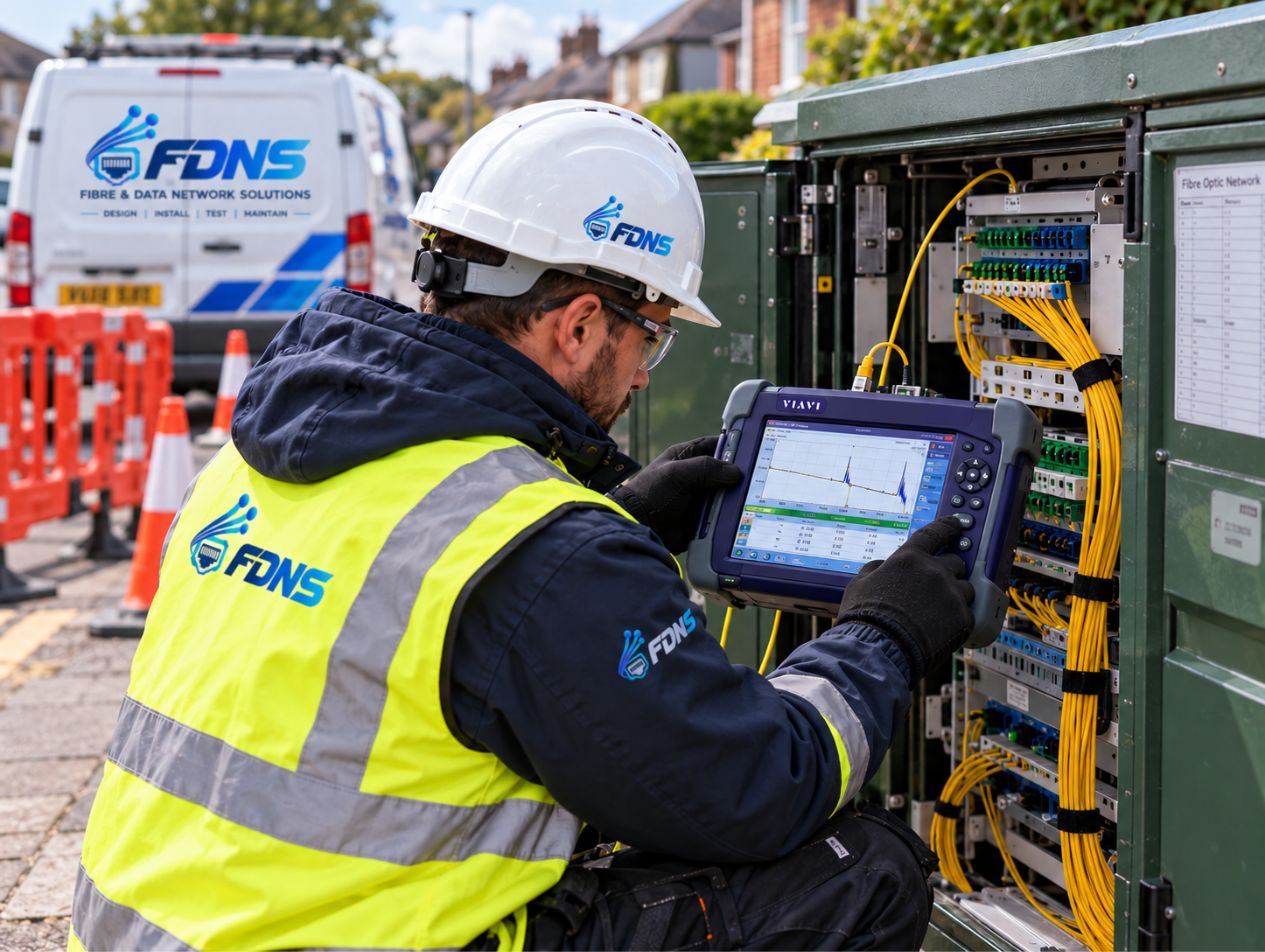
Tier 1/basic testing assesses insertion loss and the associated length and polarity requirements of the agreed specification, using suitable OLTS or light-source and power-meter methods. ORL is a separate measurement included where required. Tier 2/extended testing adds OTDR analysis of individual events; it does not replace end-to-end loss testing. Test directions, launch and receive arrangements, settings and limits must suit the link.
FDNS supports OS2 singlemode and OM3, OM4 and OM5 multimode systems. Multimode measurements use appropriate launch conditions, including Encircled Flux compliance where required. Wavelengths and reference methods follow the specified scope. Connector end faces are inspected and cleaned as needed before connection and measurement. Results are assessed against the installed system, optical budget and application rather than one generic pass setting.
Bidirectional OTDR analysis can improve event-loss assessment where adjoining fibres have different backscatter characteristics. PON testing also needs methods suited to splitters and the live or dark network state. In-service investigation requires compatible filtered equipment, an approved wavelength and operator-agreed procedures. A maintenance-wavelength trace does not replace service-power measurement. Confirm access, protection and any outage requirements before work begins.
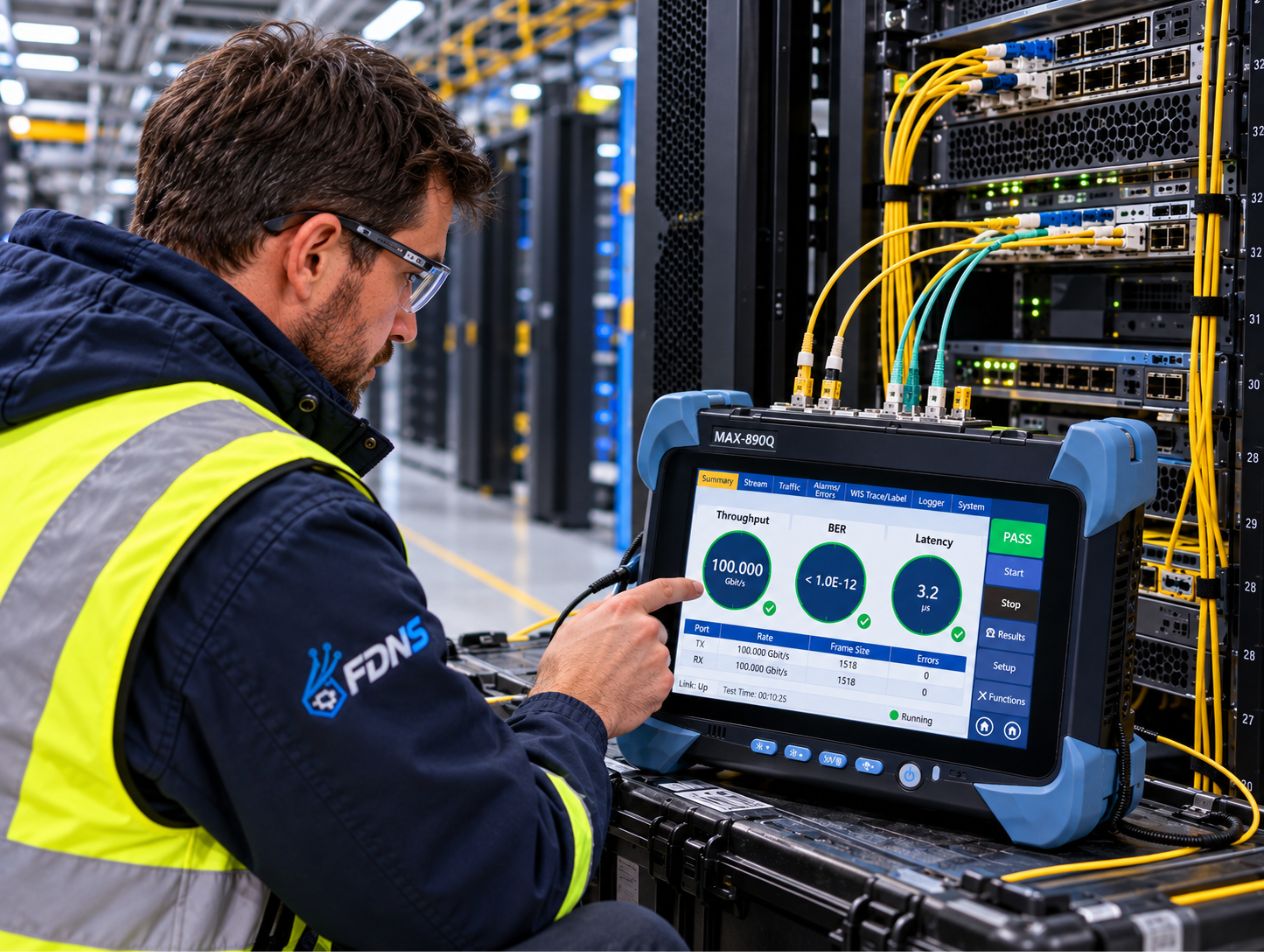
Handover can include reports, native files, fibre identifiers, wavelengths, limits, test arrangements and exceptions. Findings should explain any recommended remediation and its verification. FDNS uses VIAVI, EXFO, Softing and Fluke Networks equipment selected for the task. Advanced CD/PMD characterisation and Ethernet BERT/FEC testing are separate scopes where justified. Applicable standards, editions and customer acceptance criteria are agreed within the specification.
Related Services
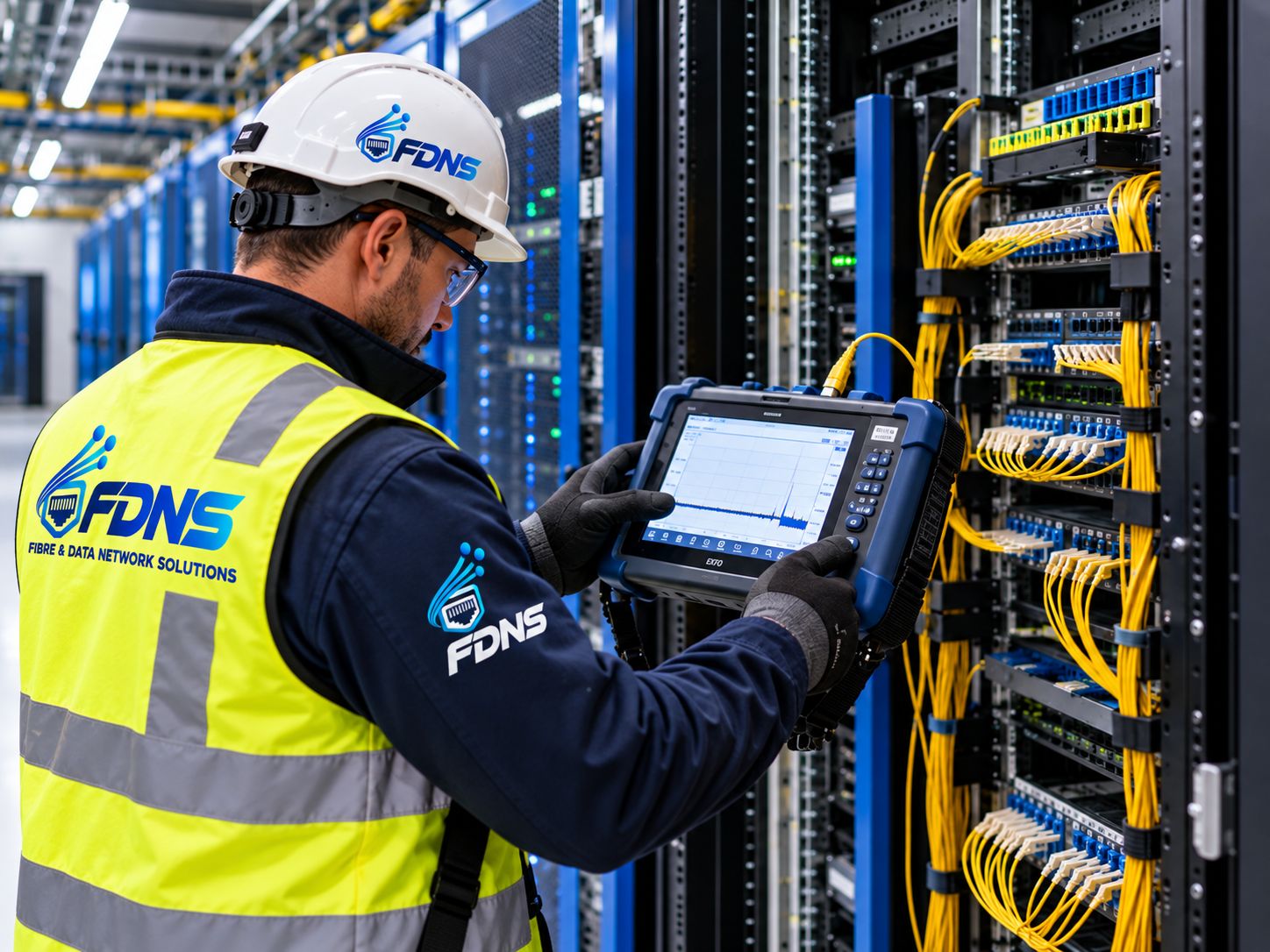
Fibre Optic Testing Services in Leek at a Glance
FDNS provides fibre optic testing, certification and fault-finding services across Leek and the surrounding area, including Cheddleton, Endon, Biddulph, Rudyard, Ipstones, Brown Edge and surrounding Staffordshire Moorlands communities. We support enterprise networks, telecoms infrastructure, education, data centres, public-sector estates and other organisations requiring professional OTDR testing, insertion-loss testing, optical return-loss testing, connector inspection, bi-directional testing and fibre fault investigation.
Cheddleton, Endon, Biddulph, Rudyard, Ipstones, Brown Edge and surrounding Staffordshire Moorlands communities.
Typical Projects
- New fibre installation acceptance testing
- OTDR testing and trace analysis
- Fibre fault finding and remediation verification
- Network upgrades and migration programmes
- Data centre fibre certification
- PON and telecommunications fibre testing
Sectors We Support
- Enterprise and commercial networks
- Telecommunications
- Data centres and hyperscale environments
- Education and campus networks
- Public sector
- Utilities and infrastructure
Why choose FDNS?

Experienced
35+ years delivering fibre
networks nationwide.

Quality Assured
ISO 9001, 14001 & 45001
certified.

Technical Experts
Skilled engineers and
specialist equipment.

Nationwide Coverage
Projects delivered
across the UK.

Evidence-Led Handover
Full test results and
documentation.
Fibre Optic Testing in Leek – Frequently Asked Questions
1. Who provides independent fibre optic testing in Leek?
FDNS provides fibre optic testing for organisations in Leek and nearby areas including Cheddleton and Endon. The scope can cover installation acceptance, existing-link assessment, fault investigation and post-remediation checks. We agree the fibre type, measurements, limits, access and reporting requirements before attendance. Independent testing can provide evidence separately from the original installation work, with findings interpreted against the specified network requirements.
2. What is the difference between Tier 1 OLTS testing and Tier 2 OTDR testing?
Tier 1/basic testing assesses end-to-end insertion loss and the associated length and polarity requirements of the specification. Tier 2/extended testing adds OTDR analysis to help characterise individual events along the fibre. OTDR evidence does not replace the basic loss measurements. Agree the applicable test standard, reference method, wavelengths and limits so the resulting records demonstrate the required scope rather than simply showing a generic pass.
3. Why might bidirectional OTDR testing be required?
The apparent loss of a splice or connection can differ when measured from opposite directions because the adjoining fibres have different backscatter characteristics. Bidirectional OTDR analysis combines the corresponding measurements to improve event-loss assessment. Access arrangements, launch and receive fibres, test settings and event identification must be controlled. FDNS agrees the required directions and reporting method with the customer rather than treating every trace as interchangeable.
4. Can FDNS test both singlemode and multimode fibre?
FDNS supports OS2 singlemode and OM3, OM4 and OM5 multimode fibre systems. The test method must suit the installed fibre, connectors and application. Multimode loss testing needs appropriate launch conditions, including Encircled Flux compliance where required. Wavelengths, reference methods and limits are agreed in advance. Existing fibre records and endpoint access help establish whether the work is acceptance testing, troubleshooting or assessment for reuse.
3. Why might bidirectional OTDR testing be required?
The apparent loss of a splice or connection can differ when measured from opposite directions because the adjoining fibres have different backscatter characteristics. Bidirectional OTDR analysis combines the corresponding measurements to improve event-loss assessment. Access arrangements, launch and receive fibres, test settings and event identification must be controlled. FDNS agrees the required directions and reporting method with the customer rather than treating every trace as interchangeable.
No. Insertion loss measures how much optical power is lost through a link, while optical return loss describes light returned towards the source. OTDR event reflectance addresses reflections at particular events and is another distinct result. The application and specification determine which measurements are needed. FDNS records the selected methods and limits so the report does not present different measurements as equivalent evidence.
6. Can you investigate an existing fibre fault in Leek?
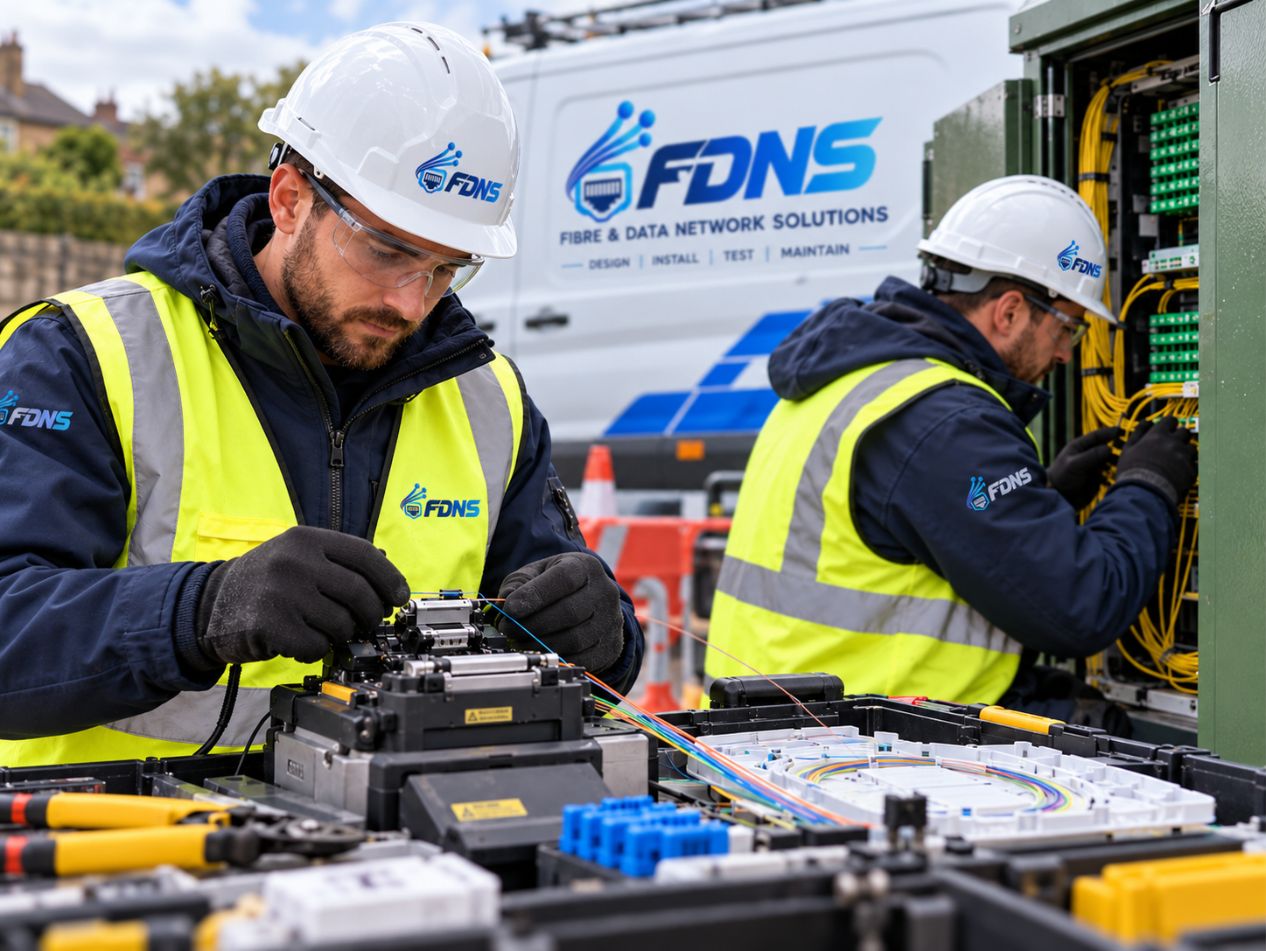
FDNS can investigate suspected fibre faults in Leek using connector inspection, loss testing and appropriate OTDR methods. Provide the affected fibre identifiers, endpoint locations, symptoms, service status and previous records where available. Testing can help locate breaks, excessive loss, poor connections or bending-related issues. The investigation should record evidence, identify any limits on the diagnosis and verify the result after agreed remedial work.
7. What reports are supplied for fibre certification and handover?
Agree the deliverables before testing. Reports can identify each fibre and its endpoints, the test method, wavelengths, limits, measurement results and exceptions. Native files and OTDR traces can be included where specified, together with findings and remediation recommendations. Clear asset names and an agreed reference method make results easier to audit and compare. Certification evidence relates to the measured scope and stated acceptance criteria.
8. Can fibre testing be carried out on a live GPON or XGS-PON network?
Some in-service investigations are possible using compatible filtered test equipment, suitable wavelengths and an operator-approved method. The splitter architecture, optical levels and service state affect instrument selection and interpretation. A filtered maintenance-wavelength OTDR trace is not a substitute for measuring service-wavelength power. FDNS confirms access, protection arrangements and any outage needs before testing; uninterrupted service must not be assumed for every test or network.
9. When are CD/PMD or Ethernet BERT/FEC tests needed?
CD/PMD characterisation may be relevant to particular high-speed or longer-distance singlemode transmission systems. Ethernet BERT/FEC measurements address a different part of the service assessment and require a defined active test setup. These tests are not routine substitutes for loss testing or OTDR acceptance of every short enterprise link. FDNS can define an advanced scope from the intended equipment, application and transmission requirements.
10. What information is needed for a fibre testing quote in Leek?
For a Leek enquiry, provide site addresses, fibre type, approximate core count, route length if known, connector details and the reason for testing. Include existing results, required standards or limits, endpoint access and the preferred timescale. State whether fibres carry live services and whether outages are permitted. These details determine equipment, test directions, attendance and reporting effort, allowing the quote to reflect the actual scope.